A while back I wrote about how, using game theory simulations, we can conclude that our species evolved to have a bias toward cooperation. That’s heartening news. As I type this we’re well into our second month of a pointless war, so you may take solace in (re)reading that piece now.
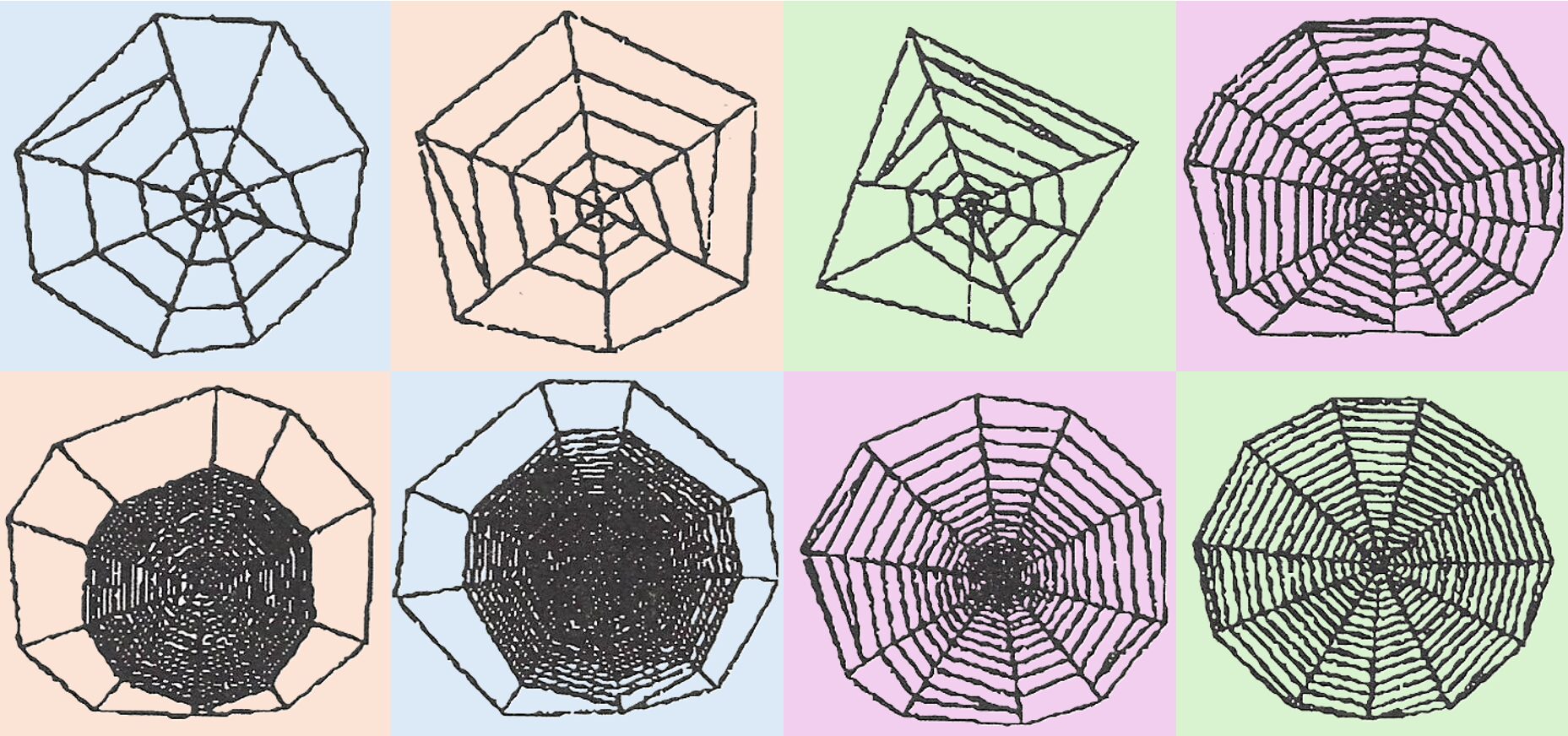
The data from that simulation was so definitive it didn’t need to be visualized. Conversely, the data from the work by biologist Peter Fuchs and professor of computer science Thiemo Krink cries out for graphical representations. As you’ll see in the eight-minute video embedded below, Fuchs and Krink simulated natural selection by randomly scattering virtual “flies” onto different web designs and measuring efficiency based on the amount of silk used versus the number of insects caught.
In spite of my lack of mastery of advanced math (note: the name of this blog), I seem to be attracted to the construction of algorithmic ecosystems that seek to explain behavioral evolution. My prior post used the game called The Prisoner’s Dilemma to see if cooperation is a genetic adaptation (it is).
In this instance, these were the rules to the “game” that simulated web evolution, as a central proof that natural selection can “design” complex structures without a conscious designer:
- Cost (Web Protein Score): Total length of silk laid down, as the sum of all radial and spiral segments.
- Benefit (Bug Protein Score): The number of randomly scattered “virtual flies” that intersect with the web’s threads and are therefore eaten.
You can read more about the NetSpinner program in Richard Dawkin’s groundbreaking book Climbing Mount Improbable. (I misspoke in the video and called it WebSpinner, and misidentified the mature ant lion as a mayfly. It’s actually a lacewing. Mea culpa.)
Doodle-bug, doodle-bug
He searched around till he found a small sandy spot with a little funnel-shaped depression in it. He laid himself down and put his mouth close to this depression and called …
Mark Twain, The Adventures of Tom Sawyer
“Doodle-bug, doodle-bug, tell me what I want to know! Doodle-bug, doodle-bug,
tell me what I want to know!”
The sand began to work, and presently a small black bug appeared for a second
and then darted under again in a fright.
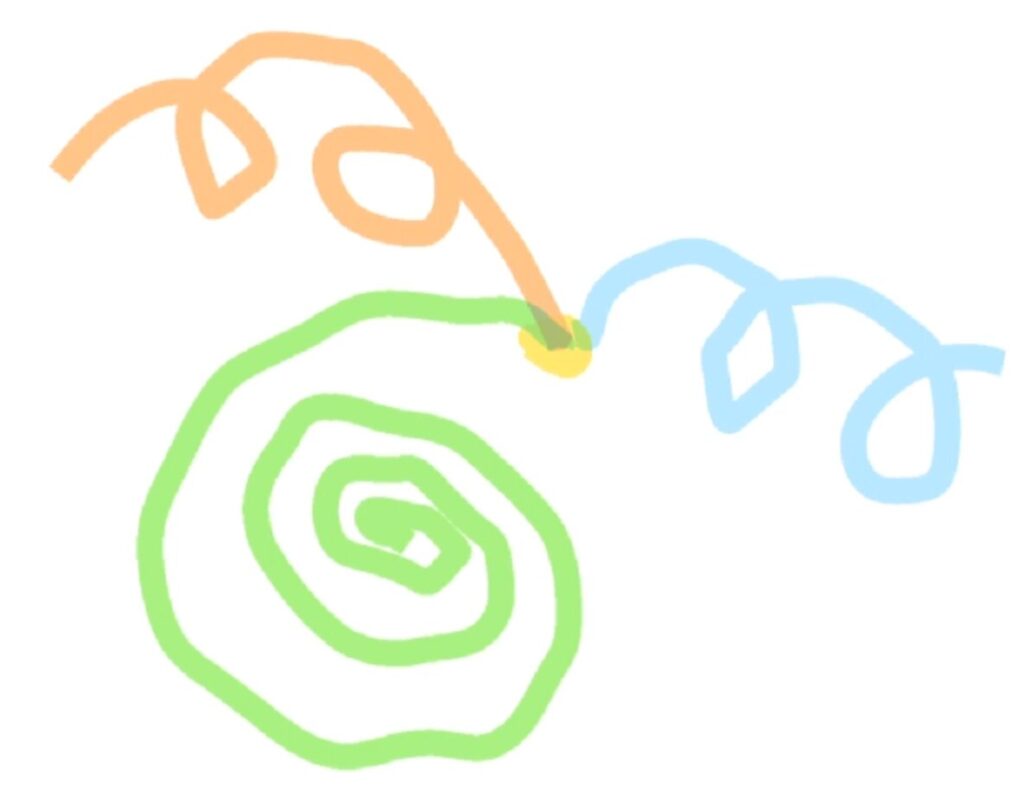
If you make it to the eighth and last minute of my video, you’ll learn about a second predatory arthropod: the ant lion. Like the spiders simulated in NetSpinner, ant lions lay in wait for their meals. Those meals are — you guessed it — ants. They trap and devour them in conical indentations in the sand they call home, built by dragging their backsides across the surface of loose sand in a perfect spiral.
As a boy, similar to Mark Twain’s fictional character Tom Sawyer, I would watch these critters make curved furrows in the sand — the behavior that earned them the nickname “doodle bug” — and wonder at an insect like no other I had encountered.
As an adult, I still genuinely marvel at the elegant funnel-shaped design of the ant traps.
You’ll even see me in the video doing my own doodling, as a way to visualize how this behavior of carving sand furrows that ensnare ants might evolve over time using similar rules of natural selection to become today’s highly optimized snares. Here’s a still from the video: